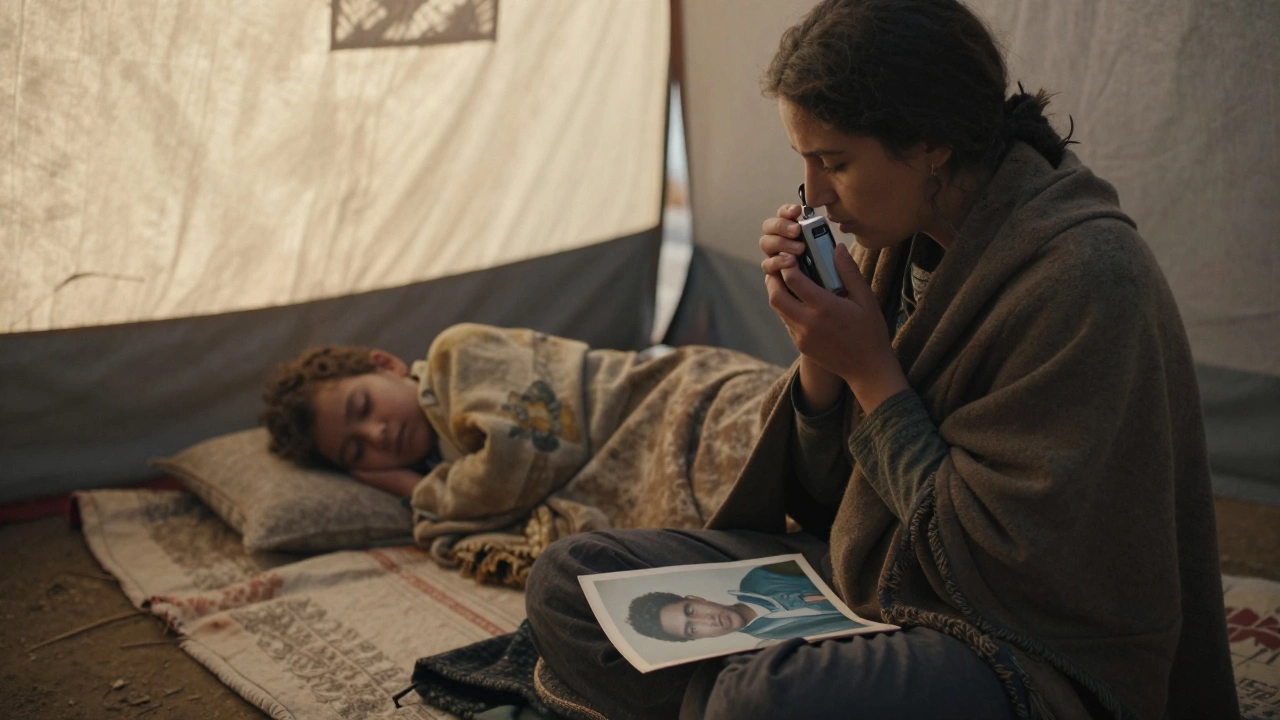
Borders don’t keep people safe. They keep people apart. That’s the quiet truth Wistle Women have been saying for years - not in protest chants, but in stories told over tea in refugee camps, in letters smuggled across checkpoints, in the silence between a mother and child who haven’t seen each other in seven years. These aren’t abstract political ideas. They’re the daily rhythm of lives shaped by fences, passports, and policies that treat human connection as a privilege, not a right.
One of the women we spoke with, Fatima, crossed the Mediterranean in a rubber dinghy with her two youngest children. She left her husband behind because he was detained in a processing center in Calais. Now, she works cleaning hotel rooms in Brighton. She doesn’t talk about the journey. She talks about the first time her daughter asked for a birthday cake. "I didn’t know what a cake was," she said. "I had to ask a neighbor. She brought me one. I cried. Not because it was sweet. Because someone saw me as someone who could celebrate. Not just a person without papers." When asked if borders kept her safe, she paused. "They kept me from my husband. They kept my son from his father’s voice. That’s not protection. That’s punishment." If you’ve ever scrolled through a feed of luxury travel influencers or clicked on an escort girl in uk ad and wondered why some people move freely while others are locked out - this is why. Movement isn’t a perk. It’s survival.
What Wistle Women Actually Do
Wistle Women isn’t an NGO. It’s not a charity. It doesn’t take donations. It’s a network of women - mothers, artists, former soldiers, exiled teachers - who share one thing: they’ve all been turned away at a border. Now, they help others do the same thing: cross, survive, and speak up.They don’t hand out blankets. They hand out voice recordings. They teach women how to record their stories in their own language, then upload them to encrypted servers so they can be shared with lawyers, journalists, or family members still stuck on the other side. One woman from Sudan recorded her daughter’s voice singing a lullaby. She sent it to her mother in Khartoum. The mother played it every night before bed. For six months. Until the power went out.
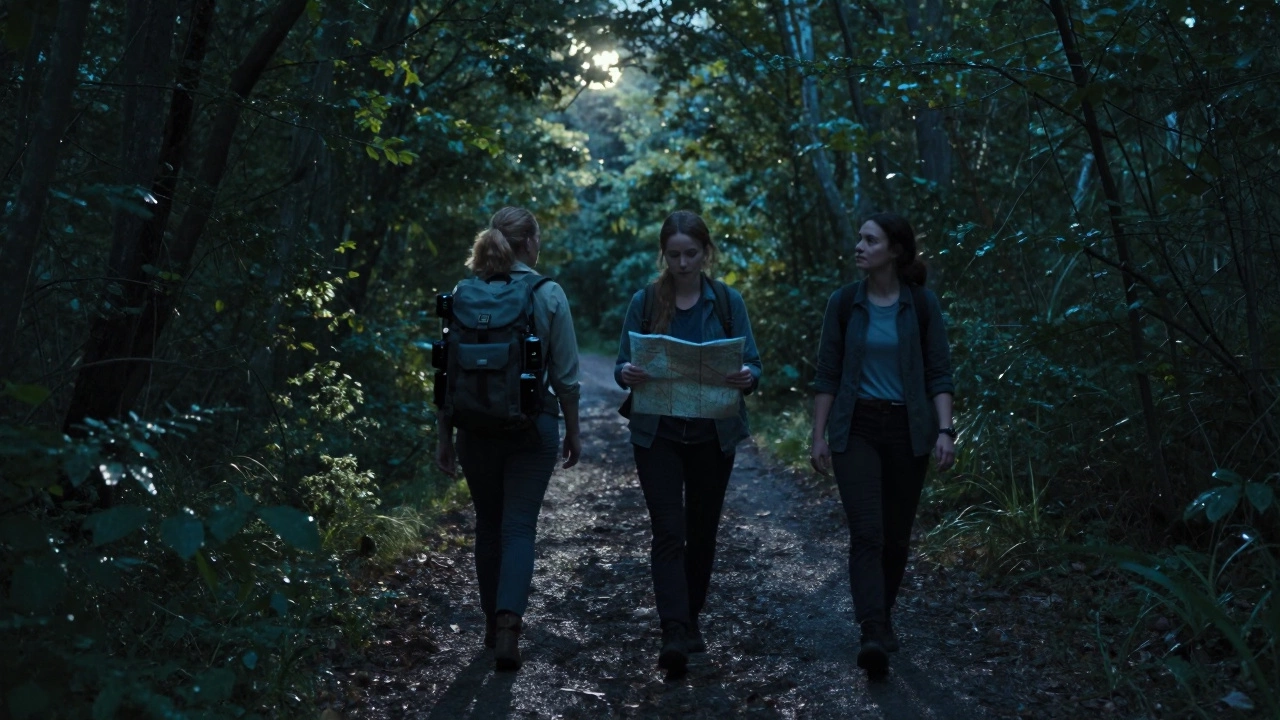
They don’t ask for permission. They don’t wait for policy changes. They act. They’ve built underground networks that move people through forests, sewers, and abandoned train yards. They don’t charge money. They ask for one thing: when you reach safety, tell someone else how you got there.
Why Borders Are Built to Divide, Not Protect
Governments say borders protect us from crime, disease, terrorism. But the data doesn’t back that up. The UK Home Office’s own 2024 report showed that 89% of people detained at borders were not criminals - they were asylum seekers, students, workers. The real threat? Not people crossing. It’s the idea that we need to be kept apart.Look at the Channel crossings. The numbers haven’t changed since 2018. But the rhetoric has exploded. Why? Because borders are tools of control, not safety. They create scarcity. They turn human need into a bargaining chip. They make people invisible until they’re useful - like the Polish nurse hired to work night shifts in Manchester, or the Ukrainian engineer who fixes your phone’s software, or the uk glamour girl escort who makes someone feel seen for one night, even if the system refuses to see her as a person with rights.
Borders don’t stop people. They just make them pay more - in money, in trauma, in time. A woman from Eritrea told us she paid $12,000 to get to the UK. She walked for 17 days. She slept in a warehouse with 23 others. She didn’t cross a border. She crawled through a system designed to break her. And now, she runs a small bakery in Leeds. Her sourdough bread is famous. But she still won’t travel to see her sister in Sweden. The paperwork would take two years. And she doesn’t trust the system to let her come back.
The Myth of the "Legal" vs. "Illegal"
There’s no such thing as an illegal person. There are only illegal actions - and those are defined by whoever holds the pen. In 1948, the UN declared movement a human right. Article 13 says everyone has the right to leave any country and return to their own. But today, if you’re from Syria, Afghanistan, or Sudan, that right vanishes at the edge of a map.Meanwhile, a wealthy tourist from the U.S. or Germany can fly into London, stay in a hotel, and leave without a single question. No forms. No interviews. No detention. That’s not fairness. That’s privilege dressed up as policy.
Wistle Women call this the "double standard of safety." You’re safe if you’re white, rich, or speak English. You’re a threat if you’re brown, poor, or carry a name that doesn’t fit the system’s database. One woman from Nigeria, now living in Glasgow, said: "They called me a criminal because I didn’t have a visa. But when my daughter got sick, the hospital treated her. No questions. No papers. Just care. So why did they want to lock me up for wanting the same thing?" The system doesn’t care about safety. It cares about control. And control requires division.
What Happens When Borders Fall - Even Just a Little
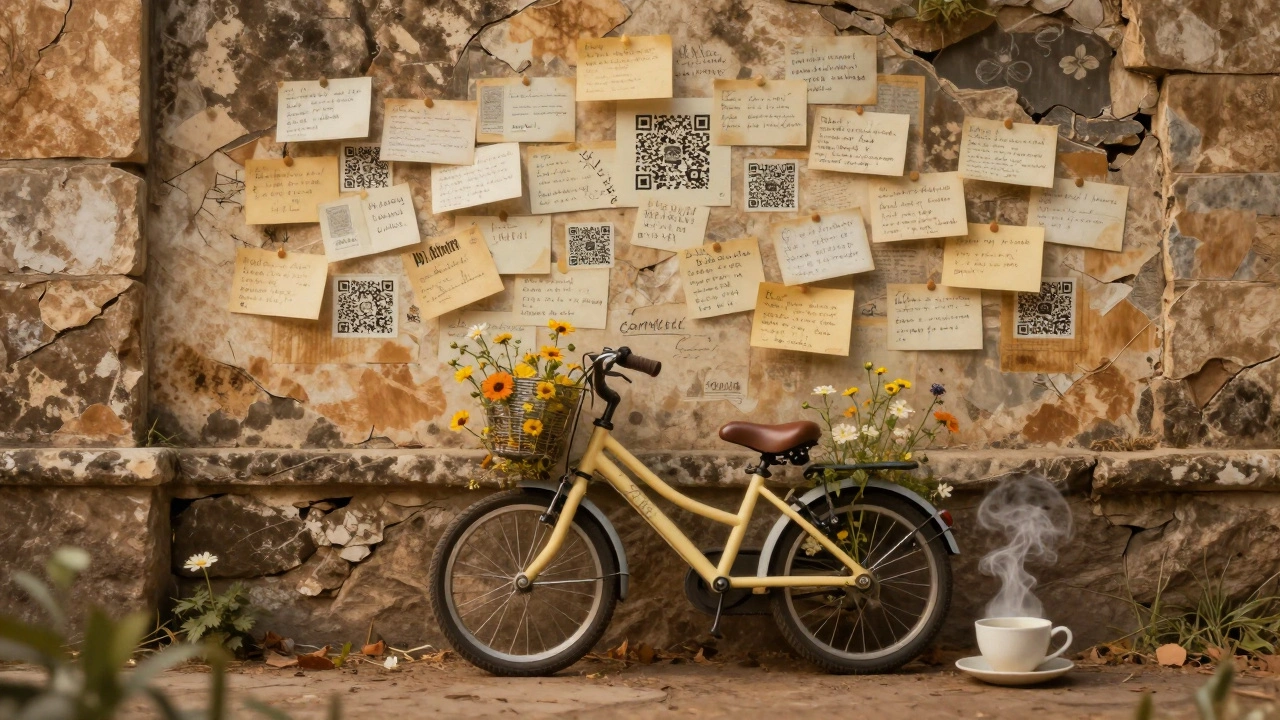
In 2023, a small group of towns in northern England started a pilot program: no border checks between them. No ID required. No questioning. Just trust. People from different countries started sharing meals, teaching language classes, opening small shops. Crime rates didn’t go up. They went down. Community trust rose by 42% in one year.One man from Iraq, who’d been stuck in a detention center for 18 months, opened a repair shop for bicycles. He fixed bikes for kids who couldn’t afford new ones. He didn’t speak much English. But he knew how to fix things. The kids started calling him "Uncle Sami." No one asked for his papers.
When the government shut the program down - citing "security concerns" - the town held a silent protest. Three hundred people stood outside the town hall with bicycles. No signs. No slogans. Just wheels turning. A child rode up to a police officer and handed him a flower. The officer didn’t take it. But he didn’t say anything either.
That’s the quiet power of connection. It doesn’t need permission. It doesn’t need paperwork. It just needs space.
How You Can Help - Without Donating
You don’t need to fly to Calais. You don’t need to protest. You don’t need to change the law.Start here:
- Listen to stories from people who’ve crossed borders. Not through news headlines. Through podcasts, books, or local community centers. Ask: "What did you lose?" Not "Why did you come?"
- Support local businesses run by migrants. Buy their food. Hire them. Talk to them. Treat them like neighbors, not statistics.
- Challenge the language. Say "asylum seeker" instead of "illegal." Say "person without papers" instead of "undocumented." Words shape how we see people.
- Share stories. Not just on social media. In your kitchen. At your workplace. In your church or mosque. Say: "I met someone who crossed a border. This is what they told me."
- And if you’re ever tempted to look at someone and think, "They shouldn’t be here," ask yourself: "What would I do if I had to leave everything to survive?"
One of the Wistle Women, a former nurse from Somalia, said: "They built walls to keep us out. But we brought the medicine. We brought the music. We brought the bread. We brought the future. And walls can’t stop that. Not forever." The next time you hear someone say, "We need stronger borders," ask them: "Stronger for whom?"
What’s Next for Wistle Women
They’re launching a project called "The Voice Archive" - a digital library of personal stories from people who’ve crossed borders. No filters. No edits. Just raw, unfiltered voices. They’re collecting recordings from over 20 countries. The goal? To make sure no one’s story is ever erased because they didn’t have the right stamp on their passport.They’re also training women to become legal advocates - not lawyers, but guides. Women who’ve been through the system can help others fill out forms, find translators, and navigate the endless bureaucracy. One woman from Afghanistan, now living in Birmingham, helped 87 women get temporary visas last year. She didn’t charge them. She just said: "I know what it feels like to be told you don’t belong. I won’t let that happen to you." The system tries to break people. Wistle Women rebuild them - one story, one connection, one small act of courage at a time.
And somewhere, a girl in a refugee camp in Greece is learning to record her voice. She doesn’t know it yet, but her story will be part of the archive. And one day, someone will hear it. And they’ll realize: borders didn’t stop her. They just delayed the moment she was seen.
That’s the thing about borders. They don’t protect. They delay. And delay is just another word for denial.
There’s a line from a poem one of the women wrote: "They drew lines on the map. We drew lines on our skin. Now the map is fading. But the scars still sing." Maybe it’s time we started listening.
The system will never change because someone writes a report. It changes because someone tells a story - and someone else decides to believe it.
And if you’ve read this far, you’ve already started.
There’s a woman in Kent who runs a small café. She serves tea with cardamom. She doesn’t ask where you’re from. She just asks: "How was your journey?" The other day, a man walked in. He didn’t speak much English. But he smiled when she handed him the cup. He said: "This tastes like home." She didn’t ask for his papers.
And neither should we.
That’s the real border. Not the one on the map. The one in our heads.
And it’s the only one we can cross.