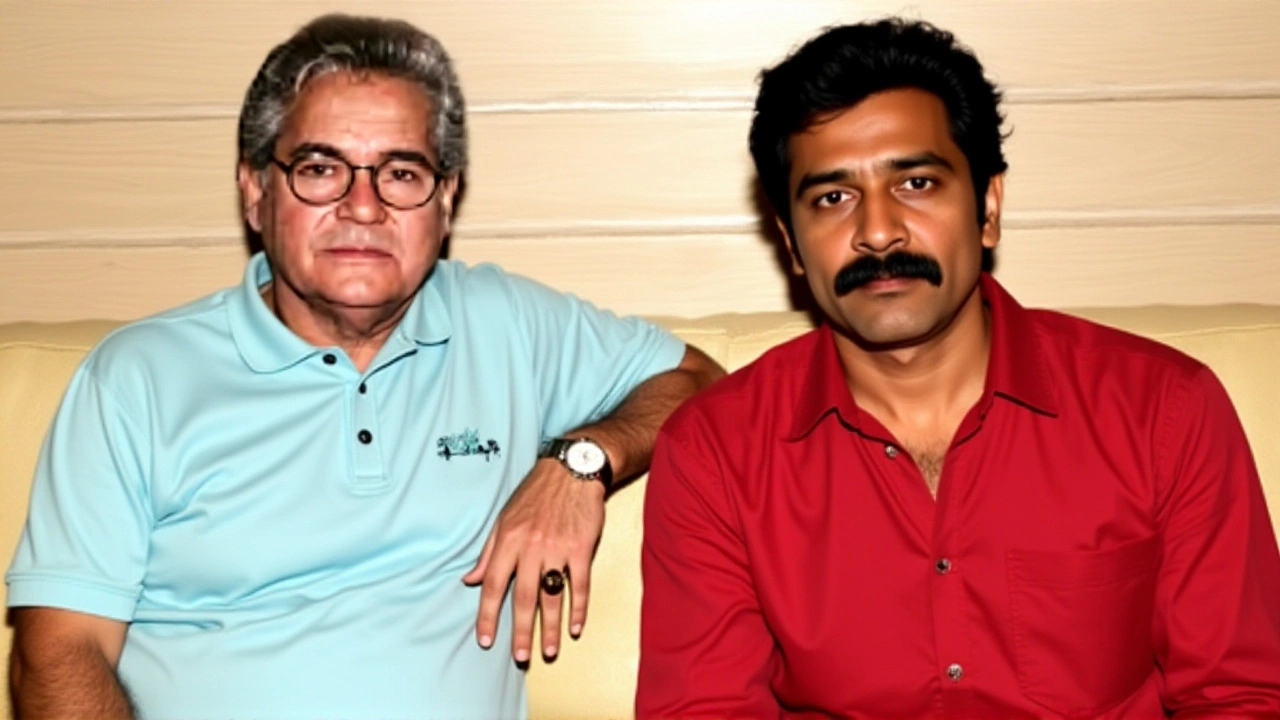
When Dharmendra Singh Deol took his last breath on November 24, 2025, at his Mumbai home, it wasn’t just the end of a legendary actor’s life—it was the closing of a chapter written in blood, sweat, and cinema. The man who defined rugged masculinity in Indian films for over five decades died on the exact day Salim Akhtar Khan turned 90, a cruel twist of fate that underscored a bond deeper than any script. Dharmendra, born December 8, 1935, in Punjab, had been discharged from Breach Candy Hospital just a week earlier after a prolonged illness. He was 89. The ambulance that pulled up to his residence that morning was the prelude to a funeral that would draw nearly every living legend of Mumbai’s film industry to the Pawan Hans Crematorium in Vile Parle.
A Friendship Forged in Struggle
Their story didn’t begin with fame. It began with hunger. In 1958, when Dharmendra was a young Punjabi actor hauling luggage at railway stations and Salim Khan was scribbling dialogue on napkins between auditions, they met in the cramped corridors of Bombay’s film studios. No one knew then that these two outsiders would become the backbone of Indian cinema’s golden age. "We were both broke," Salim once told a reporter. "He had one shirt. I had two. We shared meals. We shared dreams. And when we wrote Sholay, we wrote it for him. Who else could carry Veeru’s laughter and heartbreak?"
That partnership gave birth to classics: Seeta Aur Geeta (1972), Sholay (1975), Yaadon Ki Baaraat (1973). Dharmendra didn’t just act—he embodied. His physicality, his voice, his unapologetic charm made him the original "He-Man" of Bollywood, a title he wore without arrogance. Salim, half of the legendary Salim-Javed duo, never wrote a hero who didn’t have a bit of Dharmendra in him. "He was the first to believe in me," Salim said in a 2018 interview. "And when I had no money, he gave me his last rupee. That’s not friendship. That’s family."
The Day the Industry Stood Still
On November 24, 2025, social media was flooded with birthday wishes for Salim Khan. His daughter, Arpita Khan Sharma, posted a photo of him smiling, candlelight flickering around him. Within hours, the tone shifted. Videos surfaced: Esha Deol, Dharmendra’s daughter, walking slowly into the crematorium grounds. Hema Malini, his wife of 53 years, clutched a photo of them from their wedding day. Then came the procession—Amitabh Bachchan, silent and stoic; Shah Rukh Khan, eyes red; Salman Khan, who had called Dharmendra "my father" just weeks earlier in Qatar, stood apart from the crowd, head bowed.
It was surreal. The man who birthed Veeru was being laid to rest on the birthday of the man who gave him life on screen. "It’s like the universe wrote this ending," said veteran director Rajkumar Santoshi, who directed Dharmendra in his final film, Ikkis. "They were two halves of the same soul. One gave the voice. The other gave the fire."
The Legacy That Outlives the Body
Dharmendra’s filmography spans 187 movies, from black-and-white dramas to action epics. He was the first Bollywood star to command ₹10 lakh per film in the 1970s. He was the first to own a private jet in the industry. He was the only actor to have worked with everyone from Raj Kapoor to Aamir Khan. But more than box office numbers, it was his integrity that defined him. He never took roles that demeaned his roots. He refused to act in films that glorified violence against women. He supported young actors without fanfare.
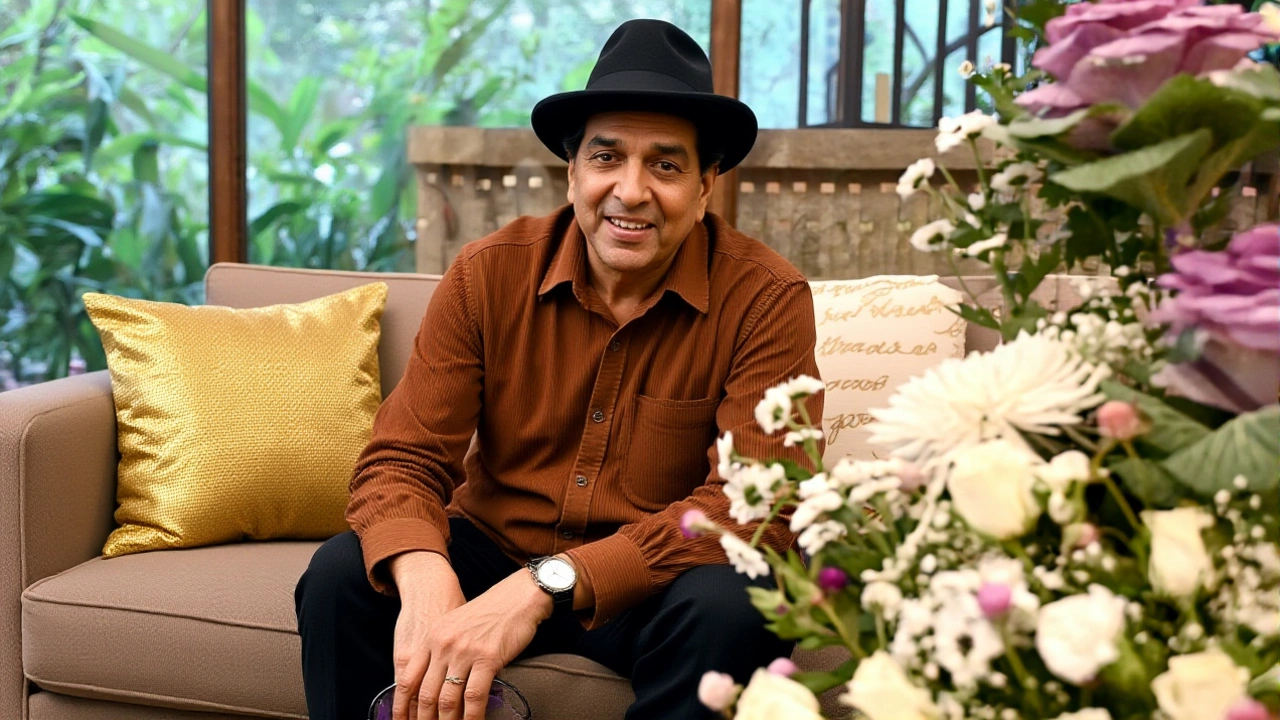
His last public appearance was at the premiere of Sholay’s 50th-anniversary restoration in August 2025. He walked in slowly, cane in hand, but his eyes lit up when he saw Amitabh. They hugged like brothers who hadn’t seen each other in years. "You still look like Veeru," Amitabh whispered. Dharmendra smiled. "And you still look like Jai."
What Comes Next?
With Dharmendra gone, the last of the original Bollywood giants—those who built the industry before the era of digital marketing and global streaming—is now history. Salim Khan, now 90, has said he won’t attend any more film events. "I’ve seen too many good people leave," he told a close friend. "I’m done with goodbyes."
Meanwhile, Ikkis, scheduled for release on December 24, 2025, will be Dharmendra’s final gift to his fans. In it, he plays an aging farmer who returns to his village after decades abroad. One scene shows him standing before a mirror, whispering, "I’ve lived enough. Now let them remember me as I was."
Why This Matters
This isn’t just the passing of an actor. It’s the end of an era where cinema was built on relationships, not algorithms. Where stars didn’t need Instagram to earn love—they earned it through truth. Dharmendra didn’t just play heroes. He was one. And Salim Khan didn’t just write stories. He wrote a tribute to a man who never stopped believing in the power of a simple, honest performance.
Frequently Asked Questions
How did Dharmendra and Salim Khan’s friendship begin?
They met in 1958–1959 as struggling newcomers in Mumbai’s film industry, sharing meals, dreams, and financial hardship. Salim Khan has described Dharmendra as the only person who stood by him when he had nothing, calling him "like an elder brother." Their bond was forged not in fame, but in survival.
What films did Dharmendra and Salim Khan work on together?
Their most iconic collaboration was Sholay (1975), where Dharmendra played Veeru. He also starred in Seeta Aur Geeta (1972), Yaadon Ki Baaraat (1973), and Sanyasi (1975)—all written by Salim Khan as part of the Salim-Javed duo. These films defined the action-drama genre in Indian cinema.
Why was Dharmendra’s death on Salim Khan’s birthday significant?
It was a poignant, almost symbolic convergence: Dharmendra, born December 8, 1935, died on Salim’s 90th birthday—November 24, 2025—just 45 days before he himself would have turned 90. Their lives were intertwined in time as much as in art, making the day feel like a final, unspoken scene in their shared story.
Who attended Dharmendra’s funeral?
Nearly every major Bollywood figure was present: Amitabh Bachchan, Shah Rukh Khan, Salman Khan, Aamir Khan, Sanjay Dutt, Zayed Khan, and Salim Khan himself. Even industry executives like Siddharth Roy Kapur and directors like Anil Sharma and Rajkumar Santoshi paid their respects, reflecting Dharmendra’s unparalleled influence across generations.
What is Dharmendra’s final film, and when will it release?
His final film, Ikkis, is scheduled for release on December 24, 2025—exactly one month after his death. Directed by Rajkumar Santoshi, the film portrays an aging man returning home, echoing Dharmendra’s own life journey. Its release will serve as a quiet tribute to a man who gave cinema its soul.
How is Dharmendra remembered by younger actors?
Salman Khan, whose career was shaped by Dharmendra’s legacy, called him "my ultimate fitness inspiration since the 90s" and said, "Before me, it was always Dharam ji." Many young stars cite his work ethic, humility, and refusal to compromise his values as the gold standard for stardom in India.